

The 2026 Boston-Silicon Valley AI Film Festival: 11 Awards and the Convergence of AI & Filmmaking
News originally published by
EIN Presswire

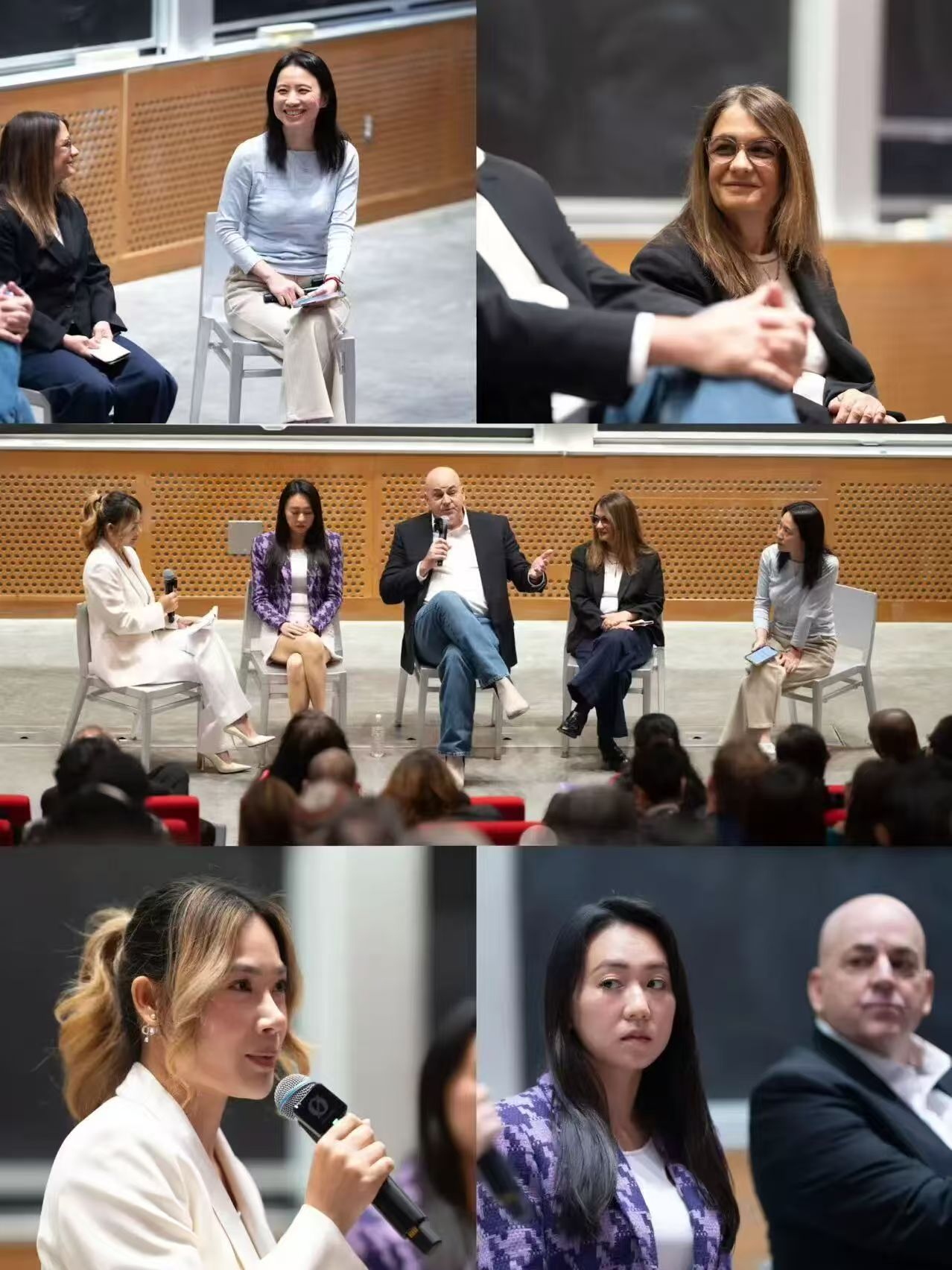
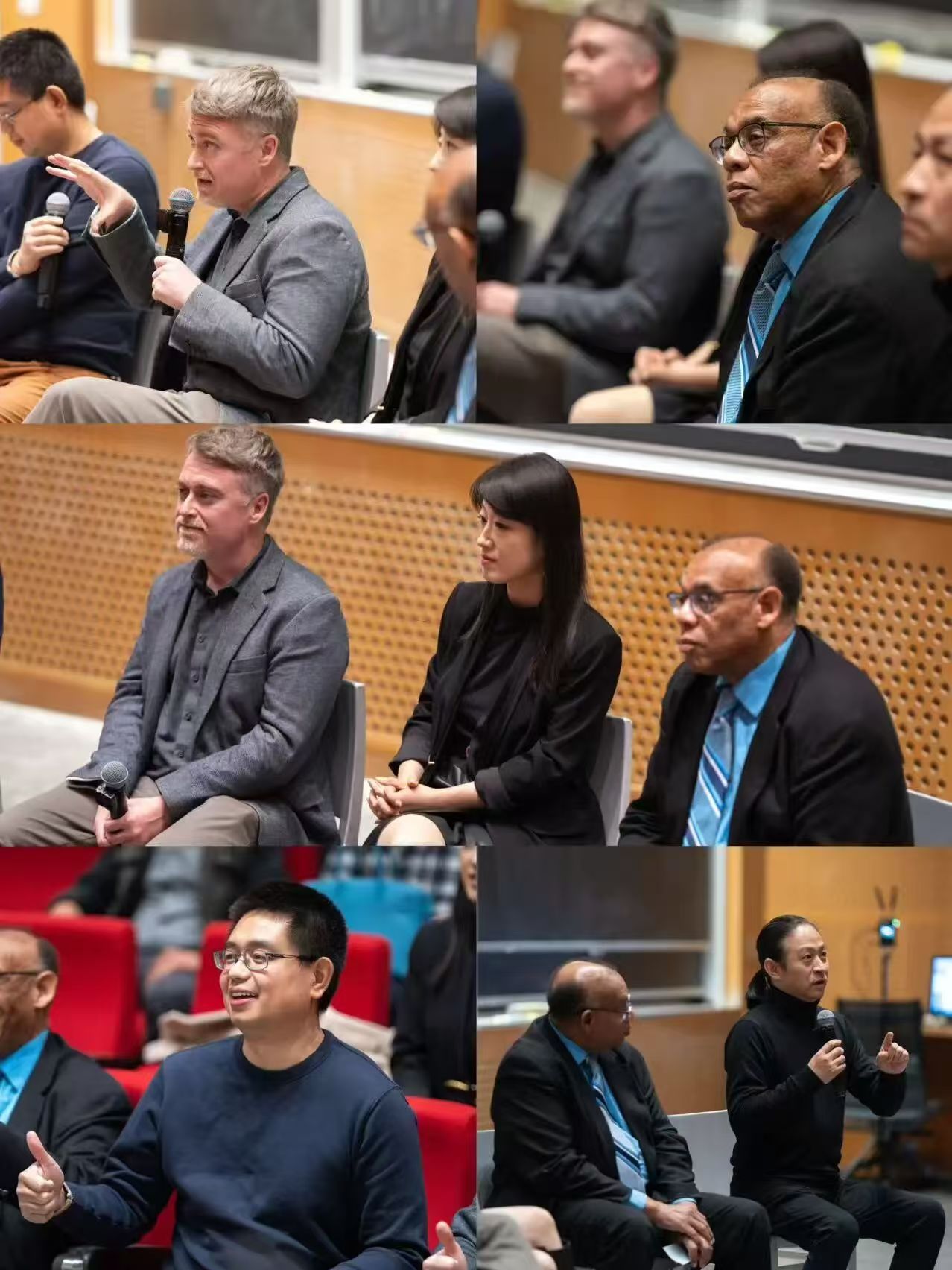
The Oct. 31 program at MIT featured film screenings, two industry panels and 11 awards. 'Earlier' received Best Film.
CAMBRIDGE, MA, UNITED STATES, November 10, 2026 /EINPresswire.com/ -- Reporter Xiangning Liu | The 2026 Boston-Silicon Valley AI Film Festival concluded Oct. 31, 2026, at the Massachusetts Institute of Technology (MIT). The event brought together filmmakers, artificial intelligence researchers, technology entrepreneurs and academics to explore how AI is changing visual storytelling, film production and the business of filmmaking.The festival took place at Kirsch Auditorium in MIT's Ray and Maria Stata Center as part of the 2026 Boston Tough Tech Week program. Boston International Media Consulting, Inc. (BIMC), Star Alliance Culture Inc. and North America Entertainment organized the festival in collaboration with the Asian Women Development Association (AWDA), an MIT student organization, and other partners.
The Boston edition built on the festival's beginnings in Silicon Valley by pairing screenings and awards with two roundtables that brought filmmakers into conversation with researchers and business leaders. One focused on the creative decisions filmmakers and performers make when working with AI. The other examined how producers and companies might develop, finance and distribute films made with these tools.
"Earlier," an independently made film by China Academy of Art graduate student Yu Kuai, received Best Film. The festival awarded the Grand Prix to "Seven Fleeting Days" and the Jury Prize to "The Origin of Splendor." Eight additional awards recognized work in directing, writing, editing, visual design, music and other areas of filmmaking.
Principal Awards
Best Film
Yu wrote, directed, produced and edited "Earlier" independently and handled its visual design. He is a third-year master's student in game and interaction design at the China Academy of Art. The film builds its story around the question of what a person can change when given a chance to revisit the past.
In the film, young laboratory director Cheng Weixi loses a partner in an accident and turns to a time experiment in an effort to reach the moments before it happened. The attempt to change the outcome draws Cheng into a time loop. The prospect of another chance with a lost partner gives urgency to the experiment, and the story follows Cheng through cycles of grief, regret and the hope that the past can still be changed.
Grand Prix
StarStream Culture Technology Co., Ltd. produced "Seven Fleeting Days," with YuGuang Tongchen (Hangzhou) Culture & Technology Co., Ltd. as co-producer. Chi (Phoenix) Liu wrote and directed the film and served as executive producer. Mimi Liu and Lingyun Xu served as producers.
"Seven Fleeting Days" follows Lia, a single mother recovering from a serious boating accident in Bali. Over seven days, she faces her physical injuries and memories she has long kept buried.
The film makes the period of recovery its narrative frame, following Lia as the immediate consequences of the accident give way to a more personal reckoning. Her progress is measured through changes in how she understands her past and begins to come to terms with it.
Jury Prize
Woodfilm (Beijing) Culture Media Co., Ltd. produced "The Origin of Splendor." Fiona Feng led the project and served as executive producer. Xiao Zhe, Zhao Xinchen and Cui Zimeng received producing credits, and Wang Sicong served as AI director.
The film follows Su Jinxin, a contemporary designer of hanfu, a form of traditional Chinese clothing. When she unexpectedly finds herself in ancient China, she learns about the techniques that shaped the garments she designs. Her discoveries include silk weaving, traditional dyeing, embroidery and gilding. The story uses a designer's encounter with the making of these garments to explore what is carried forward when skills and knowledge pass from one generation of artisans to the next.
Additional Award Winners
Best Director — "Blade of Fate"
Best Screenplay — "Anthropopathy"
Best Editing — "Choose Your Human"
Best Shot Design — "Mother of Exiles"
Best Production Design — "Water Margin"
Best Score — "The Unwritten Step"
Best Animated — "The Spirit of the Mountain"
Best Music Video — "Souls Between Two Worlds"
The categories recognized work at different stages of production. Screenplay and directing honors addressed how a story is conceived and realized. Shot design, production design and editing singled out decisions about how a scene is built, framed and assembled. The score, animation and music video awards also made room for work in which sound, movement or the relationship between music and images is central to the finished piece.
Opening Remarks and Commonwealth Citation
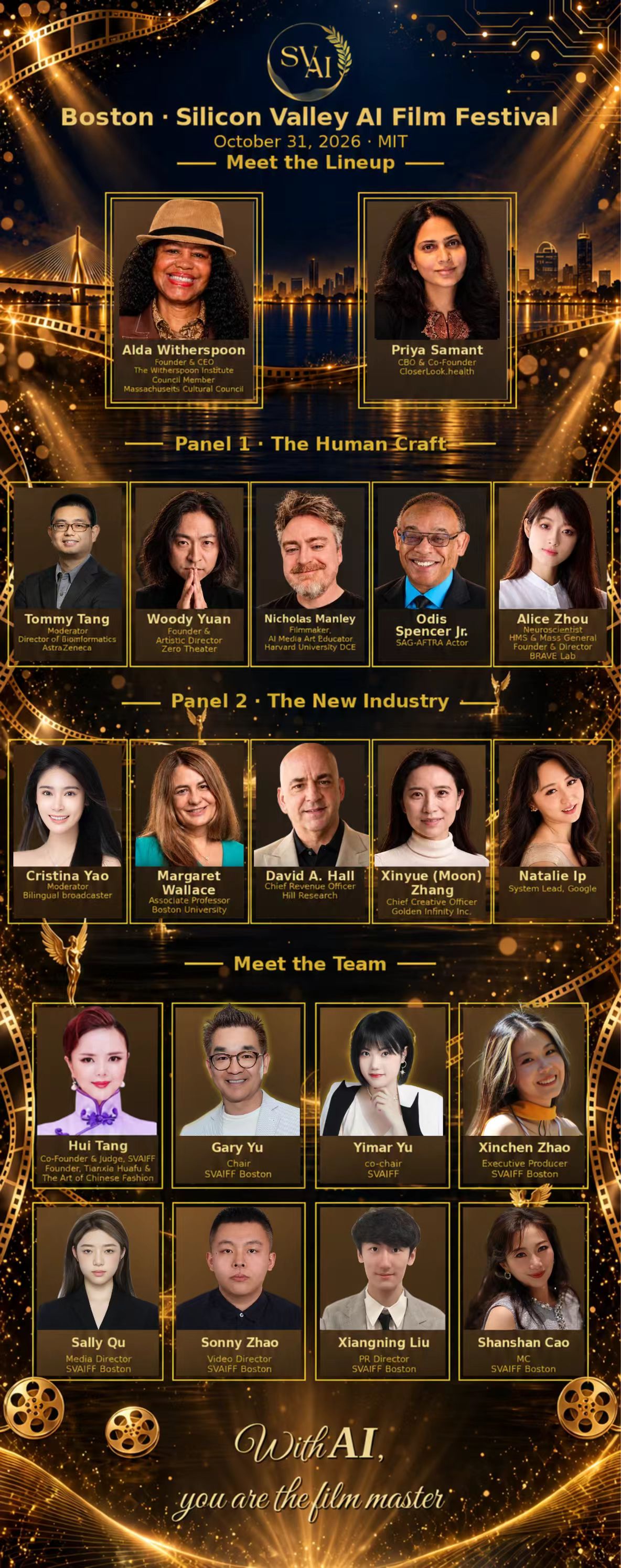
Shanshan Cao served as master of ceremonies, introducing the opening remarks, awards and discussions. Alda Witherspoon, a member of the Massachusetts Cultural Council, delivered opening remarks and presented a citation from the Commonwealth of Massachusetts.
Priya Samant, co-founder and chief business officer of CloserLook.health, joined the event as a special guest. The program gave attendees a chance to hear how film, technology and business professionals approach the same tools from their respective fields. The published agenda also included audience questions and discussion of cross-cultural storytelling.
The Human Craft and Working With AI
Tommy Tang, director of bioinformatics at AstraZeneca, moderated the first panel, "The Human Craft." The panel featured Woody Yuan, founder and artistic director of Zero Theater, and Odis Spencer Jr., a SAG-AFTRA actor. They were joined by Nicholas Manley, a filmmaker and AI media arts educator who has taught video production at Harvard Extension School, and Alice Zhou, a neuroscientist who founded and directs BRAVE Lab.
The discussion centered on human creativity and artistic judgment as AI enters the filmmaking process. Generative tools can be used during early development, when a team tests visual ideas or assembles a storyboard, as well as later, when the work involves generating images or refining an edit. That range makes the role of the filmmaker a practical question. A script, a performance and a sequence of shots each call for different decisions about where to use a tool and where the material needs a person's interpretation.
The speakers' work ranged from theater and screen performance to media education and neuroscience. Zhou is the principal investigator of BRAVE Lab, where her research uses neuroimaging to study the brain in aging and disease. Tang brought a background in applying computational tools in the life sciences. The range of disciplines matched the panel's focus on the human decisions that shape what ends up on screen.
The theme also connected the panel to the competition. In "Earlier," one creator was responsible for decisions across the script, direction, edit and visual design. "The Origin of Splendor" credited an AI director as part of a larger production team. Those credits give two concrete examples of how responsibilities can be organized on films presented at an AI festival.
The New Industry and the Business of AI Film
Cristina Yao, founder of CS Global Edge, moderated the second panel, "The New Industry." Margaret Wallace, an associate professor of the practice in media innovation at Boston University, joined David A. Hall, chief revenue officer at Hill Research. The panel also included Xinyue (Moon) Zhang, chief creative officer at Golden Infinity Inc., and Natalie Ip, a system lead at Google.
The second roundtable focused on commercial prospects for AI-assisted films, emerging production technologies and opportunities for filmmakers and companies entering the market. Its scope extended from how a team develops a project to what happens when it seeks partners, financing or distribution. Those steps matter to independent creators as well as established businesses. A tool that makes it easier to produce a visual concept may help a team show what it has in mind, while financing and distribution still depend on the project, the intended audience and the ability to deliver the finished work.
The event's published program identified authorship, intellectual property and responsible use of AI as discussion topics alongside video generation and production workflows. Questions about who contributed to a work and how its materials were made are relevant to filmmakers and their prospective partners.
From Silicon Valley to Boston
The inaugural Silicon Valley AI Film Festival took place Jan. 10 and 11, 2026, in San Jose, California. The San Jose event combined the competition with screenings, exhibits and panel discussions about what AI could change for film production and the business around it. Its first competition received more than 2,000 entries from around the world, according to organizers. The festival launched its Boston regional program May 2 at Cambridge Public Library.
The library event paired the regional launch with a conversation featuring Chinese-language writers Lu Xinhua and Bing He. Sing Chang, founder of Star Alliance Culture Inc., discussed the festival's expansion into other cities. Witherspoon and Zhou also took part in the May program, which included questions from the audience and members of the press. The October showcase continued the Boston program with screenings, awards and two industry forums.
BIMC helped bring local cultural organizations, filmmakers, researchers and creative technology professionals together for the Cambridge showcase. The screenings and discussions gave participants a place to share their work and explore potential collaborations. The festival's regional network connects the Boston program with filmmakers and partners in other cities.
The Boston festival program is available at https://boston.svaiff.com/.
About Boston International Media Consulting
Boston International Media Consulting, Inc. is a Boston-based media and communications company working in media production, public relations and event programming. Its work includes producing and covering events and helping arts, business and community organizations in Greater Boston reach audiences through media and public programming. Company information is available at https://www.helloboston.info/.
About the Silicon Valley AI Film Festival
The Silicon Valley AI Film Festival is an international festival for work made with artificial intelligence. Its programs include film competitions, screenings, awards and industry discussions that connect filmmakers, researchers and professionals working in creative technology. Information about the festival is available at https://www.svaiff.com/.
Xiangning Liu
BOSTON INTERNATIONAL MEDIA CONSULTING
Legal Disclaimer:
EIN Presswire provides this news content "as is" without warranty of any kind. We do not accept any responsibility or liability for the accuracy, content, images, videos, licenses, completeness, legality, or reliability of the information contained in this article. If you have any complaints or copyright issues related to this article, kindly contact the author above.
